60 Minute Spy Escape Room: Operator Tips to Pick One That Delivers
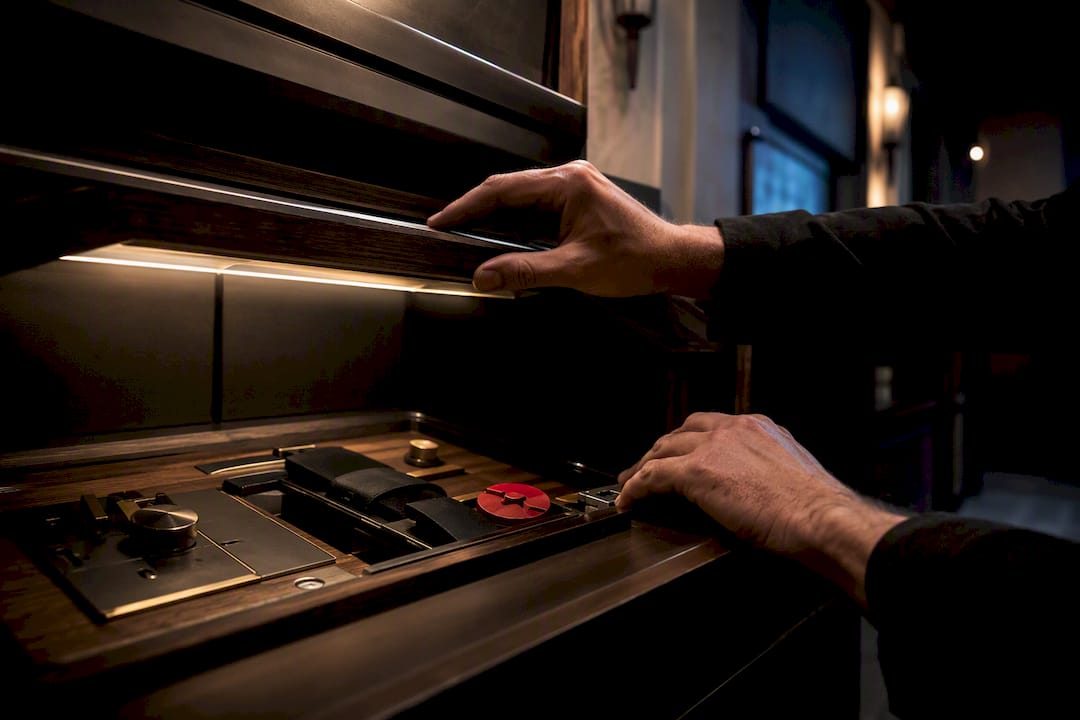
A spy escape room is an immersive, mission-based puzzle experience where your team plays undercover agents racing a clock to crack codes, defuse a plot, or expose a mole. It suits groups of two to twelve, from birthday crews to corporate teams, and works well for families with teens. If that sounds like your kind of night out, the next move is simple: book a private session or grab a printable kit for a smaller, at-home version.
Table of Contents
- What Happens Inside a Spy-Themed Escape Room?
- How Long Do Sessions Run, and What Will You Pay?
- How Do You Pick the Right Spy Escape Room for Your Group?
- What Do Experienced Operators Build Into a Great Spy Room?
- How Do You Actually Solve a Spy Escape Room Faster?
- Why Operator Experience Matters More Than Theme
- Book a Private Spy Mission With Codebusters Escape Room
- Further Reading and Booking Resources
What Happens Inside a Spy-Themed Escape Room?
Every spy escape room runs on a mission. You’re recovering stolen intel, unmasking a double agent, or stopping an attack before a countdown hits zero. That single, focused objective is what separates spy rooms from generic puzzle boxes. Many rooms in this genre are built around exactly one central mission, and the story keeps you oriented even when the puzzles get tricky.
The puzzles themselves usually fall into a few recognizable categories:
- Cryptography puzzles where you decode intercepted messages, cipher wheels, or number sequences
- Pattern puzzles hidden in wallpaper, surveillance footage, or seemingly random object placement
- Mechanical locks requiring keys, combinations, or physical manipulation you find through searching
- Evidence puzzles where scattered documents, photos, or objects only make sense once connected
Cryptography and logic puzzles tend to dominate the genre because they reward the kind of pattern recognition and group note-taking that makes spy work feel authentic rather than arbitrary. Good rooms lean into that with props: hidden compartments, low-light surveillance corners, gadget replicas, even mock security systems that react when you get close. These set pieces aren’t decoration. They’re built to make you feel like you’re actually infiltrating something, not just solving a puzzle in a room with a theme slapped on top.
Difficulty and pacing get signaled early, whether through a briefing video, a host’s opening pitch, or the room’s own design. A well-run room drops easier clues near the entrance to build momentum, then tightens the screws as you approach the final objective. Some venues push the format further with head-to-head “combat” formats, where two teams race through mirrored versions of the same mission at the same time. It’s a fun variant if your group wants competition baked into the night.
How Long Do Sessions Run, and What Will You Pay?
Most spy escape rooms run around 60 minutes of actual gameplay, with briefing and debrief time added on either side, so plan for closer to 75 to 90 minutes total. Team sizes vary widely by venue, but rooms in this category commonly accommodate anywhere from two to twelve players, with difficulty typically rated medium to hard.
Quick reference: Session length averages about an hour of gameplay. Group sizes commonly accommodate small to medium-sized teams. Difficulty is usually listed as medium to hard, and venues list these details upfront so you can match a room to your team’s experience.
A few practical things to sort out before you book:
- Age minimums vary by venue, and some offer lighter, family-friendly versions of their spy missions for younger participants
- Accessibility notes (mobility, sensory sensitivity, low-light tolerance) should be listed on the booking page or available by asking staff directly
- Pricing usually runs per person for public sessions, or as a flat rate for a private room booking that locks the whole space to your group
- Gift vouchers are common for spy rooms, making them an easy gift for a spy-thriller fan or a team lead planning an office outing
Venues that clearly publish player counts, run time, and difficulty ratings up front tend to be the ones that have thought hardest about matching the right group to the right room. If a listing is vague on these basics, that’s worth noticing before you commit.
If you’d rather skip the venue entirely, printable spy-themed kits exist for home parties. They typically run shorter, require minimal setup, and work well for a smaller crowd that wants the puzzle format without the drive.
How Do You Pick the Right Spy Escape Room for Your Group?
Start by matching the room to your group’s personality, not just its size. A team of hardcore puzzle fans wants something harder and more cerebral. A mixed group with kids or puzzle newcomers needs a room with generous clue scaffolding and a forgiving pace.
Here’s a practical way to evaluate options:
- Check the immersion level. Photos and descriptions should show real set design, not just a themed paint job.
- Match the puzzle style to your group. Heavy cryptography suits analytical teams; physical search-and-find puzzles suit teams that like moving around.
- Confirm private-room availability. If you don’t want strangers in your session, ask directly. Many venues offer it as a standard option for parties and corporate bookings.
- Ask about physical demand. Some rooms involve crouching, reaching, or tight spaces, which matters for accessibility.
- Get clear on cancellation and safety policies before you pay a deposit.
Watch for red flags in reviews: complaints about broken props, unclear hints, or staff who disappear once the game starts. Those are signs of a room that looks good in photos but falls apart under real play.
Pro Tip: Call ahead and ask how the venue handles a team that gets completely stuck. A good operator has a hint escalation system, not just a walkie-talkie that goes silent for ten minutes.
What Do Experienced Operators Build Into a Great Spy Room?
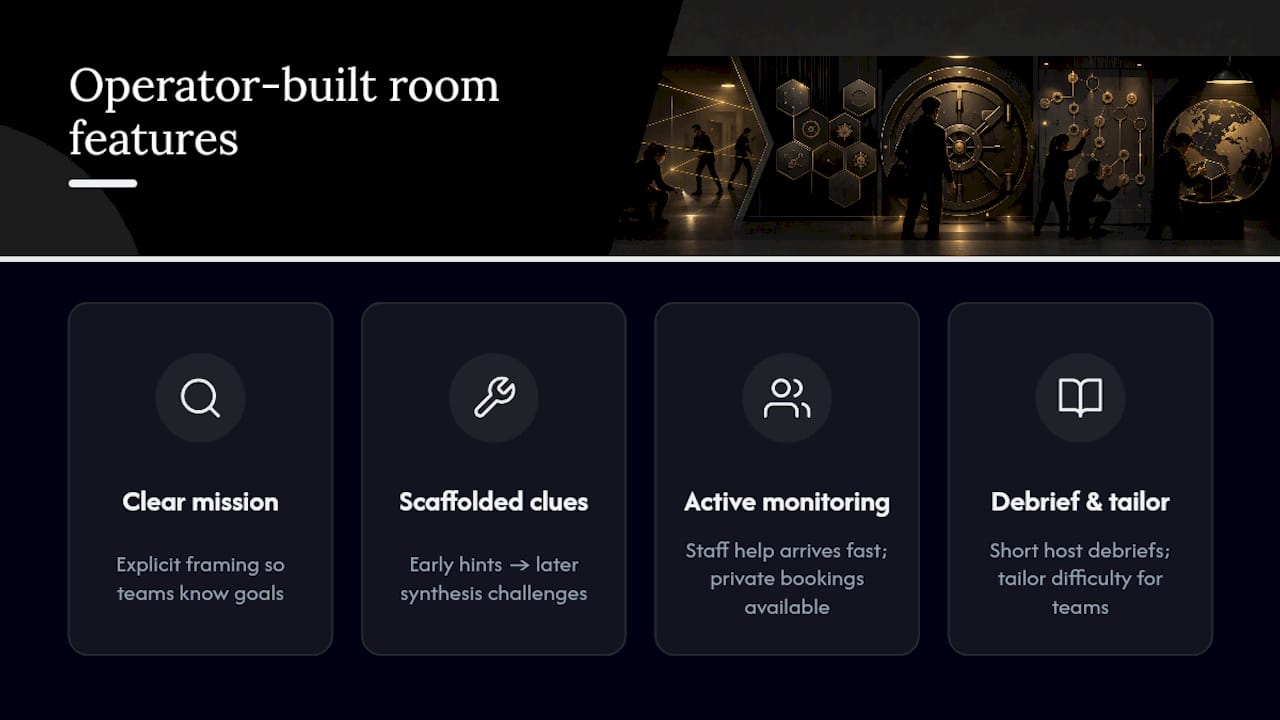
Designers who’ve run dozens of missions know the biggest failure point isn’t the puzzles. It’s unclear mission framing that leaves teams guessing what they’re even trying to do. Good rooms scaffold clues so a slower-moving team can still progress. Early hints point toward broad solutions; later ones demand synthesizing several earlier findings at once, which keeps mixed-experience groups engaged without leaving anyone behind.
Private bookings and active staff monitoring change the experience noticeably. A monitored room means help arrives fast when a team stalls, and nobody’s night gets derailed by a broken prop nobody noticed.
Short debriefs where a host walks the group through the puzzles they missed, explains the story’s resolution, and acknowledges the wins tend to matter more to guest satisfaction than people expect going in.
For corporate and team-building bookings specifically, tailoring difficulty to the group and building in time for a real debrief afterward turns a fun hour into something people actually talk about back at the office.
How Do You Actually Solve a Spy Escape Room Faster?
Speed comes from organization, not luck. The teams that finish with time on the clock almost always split roles in the first sixty seconds instead of everyone searching the same corner.
- Assign roles immediately. You need a searcher, a puzzle-solver, a note-taker, and someone whose only job is communicating what everyone else has found.
- Build a central workspace. Pile found items and clues in one spot instead of scattered across the room, and label anything ambiguous.
- Ask for a hint the moment you’re stuck for real, not the moment a puzzle feels hard. Most rooms build hints into the pacing, so use them.
- Leave phones in your pocket. Reaching for a phone breaks immersion and usually wastes more time than it saves.
Wear clothes you can move in, and clear your schedule so you’re not watching a real clock on top of the in-game one. Strong team communication habits translate directly into faster solve times, and a clear step-by-step approach beats frantic searching every time.
Pro Tip: Say what you find out loud, even if it seems useless. Half of solved puzzles come from someone connecting two clues that different people were holding.
Why Operator Experience Matters More Than Theme
The spy theme gets people through the door, but it’s not what makes a room worth the money. What separates a forgettable hour from a night your group replays for weeks is how deliberately the puzzles are paced and how much thought went into the moments when a team gets stuck.
Most advice online focuses on picking a theme you like. That’s backwards. Theme is the easy part. What actually determines whether you have a good time is whether the operator has built clue scaffolding that respects different skill levels, whether staff are actually watching the room, and whether there’s a real debrief at the end instead of a rushed goodbye.
If you’re choosing between two spy rooms with similar premises, prioritize the one that’s transparent about group size, difficulty, and private booking options. Vague listings usually mean vague execution. The rooms that spell out their logistics clearly are, more often than not, the ones that thought hardest about the experience itself.
— CodeBusters
Book a Private Spy Mission With Codebusters Escape Room
Codebusters Escape Room offers themed rooms designed for immersion, with private bookings available for parties and corporate teams, and staff who provide a proper debrief after the session.
Every session at Codebusters Escape Room is private-booking eligible, so your group won’t share the room with strangers unless you want to. Gift vouchers are available if you’re planning ahead for a birthday, an office event, or a group of friends who love a good mystery. On arrival, you’ll get a short briefing that sets up the mission, then it’s your team against the clock. If you’re organizing something for work, the corporate booking options are worth a look before you settle on a date.
Ready to lock in a session? Check available dates and book your room directly through Codebusters Escape Room’s site.
Further Reading and Booking Resources
If you want to build momentum before your session, look at how team communication shapes escape room outcomes or why themed rooms work so well for group bonding. For something to enjoy before or after your mission, this list of spy thriller books pairs well with the genre.