3 Ways Families Experience a Space Escape Room: Live, DIY, Digital
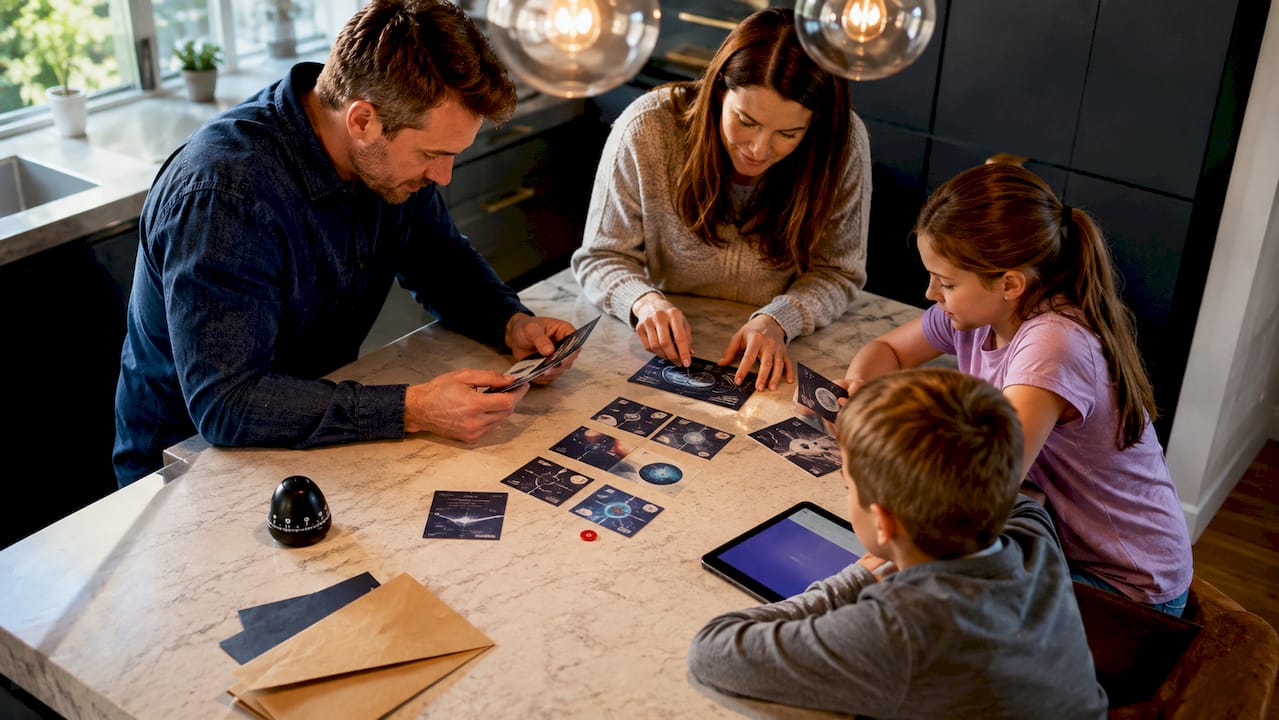
A space escape room is a story-driven puzzle challenge where players solve codes, hidden clues, and prop-based riddles to complete a mission before time runs out. You can experience one three ways: a live physical room booked at a venue, a printable print-and-play kit you run at home, or a digital mini-game you play on a screen. Each format works for a different budget, group size, and occasion.
Table of Contents
- Live Rooms, Printable Kits, or Digital Games: Which Space Escape Room Fits?
- What Happens Inside a Space-Themed Escape Room?
- How to Build Your Own Printable Space Escape Room at Home
- How to Choose the Right Space Escape Room for Your Group
- What CodeBusters Has Learned From Running Space-Themed Rooms
- Our Take: Stop Treating Live and DIY as Competing Choices
- Ready for the Real Thing? Book a Live Space Mission
- Sources
Live Rooms, Printable Kits, or Digital Games: Which Space Escape Room Fits?
Live physical rooms deliver the most immersion. You walk into a set built to look like a spaceship cockpit or space station, handle real props, and work against an actual countdown clock with a game master watching through a camera feed. Families like them because the tension is real, the room does the “worldbuilding” for you, and most venues offer private bookings so you are not paired with strangers. The tradeoff is cost, drive time, and needing to book ahead.
Printable kits flip that equation. You download a PDF, print it on regular paper or cardstock, and you have a full puzzle set ready in under an hour. They cost far less than a venue visit and scale easily for a birthday party or a classroom of twenty kids working in small teams. The printable “Mission Unknown” space adventure from EscaperoomGeeks is a solid example: it comes with a storyline, setup instructions, and three separate puzzle challenges built for exactly this kind of at-home or classroom use.
Digital and walkthrough-style mini-games sit at the instant end of the spectrum. No printing, no driving, no waiting for a booking slot. They work well solo, for kids stuck inside on a rainy day, or for anyone who wants a preview of what escape-room logic feels like before committing to a live session.
Pick your format based on:
- Age range of your group (younger kids do better with printables or digital games)
- Budget (digital is often free; printables are cheap; live rooms cost the most)
- Time available (digital games take minutes; live rooms need a booked hour-plus)
- Accessibility needs (home formats give you full control over pacing and environment)
What Happens Inside a Space-Themed Escape Room?
Most live space escape rooms run 60 minutes, and venue listings commonly cap groups between two and eight or more players at medium difficulty. That middle difficulty setting matters more than it sounds. A room pitched at “medium” usually assumes players who have never escaped anything before, which makes it forgiving for mixed-age family groups but occasionally too easy for repeat enthusiasts.
Space themes lean on a specific set of puzzle mechanics you will recognize once you have played a few:
- Code and cipher puzzles disguised as radio transmissions or launch sequences
- Wiring or circuit puzzles framed as ship repairs or power restoration
- Constellation and star-map puzzles that require pattern matching
- Physical prop interaction like control panels, airlocks, or hidden compartments
Younger kids tend to struggle most with multi-step logic puzzles and benefit from a game master or parent who nudges rather than solves. Mixed-age groups do best when at least one puzzle rewards observation over reading comprehension, so a six-year-old can contribute as much as a teenager.
Safety matters here too. Reputable venues brief players on claustrophobia concerns before locking any door, keep staff monitoring the room at all times, and can usually accommodate mobility limitations if you mention them when booking. If a venue cannot answer a direct question about supervision or emergency exits, treat that as a warning sign, not a formality.
How to Build Your Own Printable Space Escape Room at Home
Running a DIY space escape room takes less setup than most people expect. Here is a plan you can execute in an evening.
Materials checklist:
- A printer and plain paper or cardstock for durability
- Envelopes or small boxes to hide clues inside
- A timer (a phone works fine)
- A few cheap props: a flashlight, a padlock, glow sticks, or stickers for a “control panel” look
- A printed answer key for the host
Setup order matters. Lay your puzzles out so clue one leads logically to clue two, and clue two to the final code. A printable set like EscaperoomGeeks’ “Mission Unknown” already builds this sequencing in, with a start card that introduces the mission, three puzzle stages, and a final reveal. If you are writing your own, resist the urge to let players jump between puzzles. One reason printable kits work well is that a simple, enforced hint system and a strictly linear clue order keep groups from stalling out of order and losing the story thread.
Three sample puzzles you can build in minutes:
- Star-map puzzle: print a simplified constellation grid, hide a three-digit number in the pattern of stars, and have players match it to a lock code.
- Wiring puzzle: color-code four “wires” on paper, give a rule card (“connect red to the matching symbol, not the matching color”), and the correct connections spell out a two-letter abbreviation used elsewhere in the room.
- Transmission decode puzzle: give players a short message in a simple substitution cipher (A=1, B=2) that decodes to the final airlock code.
Scale difficulty by adding a second layer per puzzle for older groups, or by letting younger players skip straight to the visual clue. Whoever hosts should track time and dole out one hint every five minutes if a team stalls, which keeps the energy up without handing over the answer.
Pro Tip: Number your hint cards 1 through 3 in advance, from vague to direct. Handing out a pre-written hint feels more like part of the game and less like an adult bailing kids out.
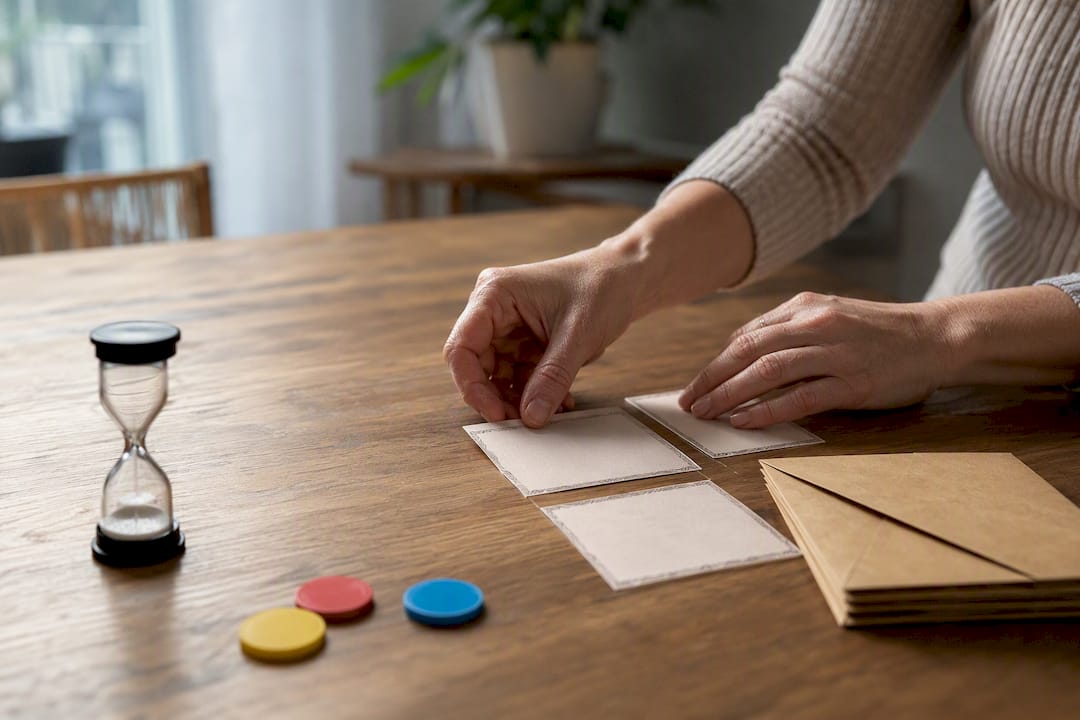
Cleanup is simple: collect props, reset envelopes, and store the answer key separately so next time’s players cannot peek. If you used any small parts like glow sticks or magnets, keep them away from very young children after the game ends.
How to Choose the Right Space Escape Room for Your Group
Start with four questions before you book anything or download a kit: age range, group size, available time, and budget. A family with kids under eight usually does better with a printable or a room specifically rated for younger players. A corporate or friend group with escape-room experience will get bored fast in a beginner-level room and should ask for something rated hard or advanced.
When calling or emailing a venue, ask directly:
- Do you offer private bookings, or will we be grouped with strangers?
- What is your refund or rescheduling policy if someone in our group cannot make it?
- Is a staff member monitoring the room the entire session?
- What is your hint policy, and how many hints does a typical group use?
- Can you accommodate mobility or sensory needs if we ask ahead?
Watch for red flags: a venue that dodges safety questions, rooms with visibly worn or broken props, or no mention of live staff oversight during the game. One useful comparison point: industry listings commonly advertise 60-minute sessions for groups of two to eight players at medium difficulty, so if a venue’s numbers are wildly outside that range without explanation, ask why.
For a birthday party, prioritize private booking and flexible group size. For a classroom, prioritize a curriculum tie-in like the STEM-focused “Escape from the International Space Station!” activity built for Key Stage 2 students, which uses coding and pattern-recognition puzzles instead of pure trivia. For enthusiasts, prioritize difficulty rating over price.
What CodeBusters Has Learned From Running Space-Themed Rooms
Puzzle sequencing decides whether a room feels satisfying or frustrating. Group teams solving in the wrong order tends to create confusion that has nothing to do with puzzle difficulty. Sequencing and pacing are worth as much attention as the puzzles themselves.
Immersion does not require a huge budget. Dimmed lighting, a looping ambient hum, and props layered so players discover them gradually beat one expensive centerpiece prop every time.
A private booking with a facilitator who reads the room, someone who knows when to drop a hint and when to let the team sweat it out, changes a family’s entire experience. That kind of pacing is hard to replicate in a DIY version, which is exactly why the live and printable formats complement each other rather than compete.
Pro Tip: If you are building a DIY room, watch a venue’s 360° walkthrough first. Seeing how professionals layer props and lighting gives you ideas you can adapt cheaply at home.
Our Take: Stop Treating Live and DIY as Competing Choices
The common advice treats live rooms and printable kits as a tier system, live rooms for people who can afford it, printables as the budget consolation prize. That framing misses the point. Each format solves a different problem. A live room solves the “we want a full immersive event” problem. A printable kit solves the “we need something fun for twenty kids in an hour” problem. Neither replaces the other.
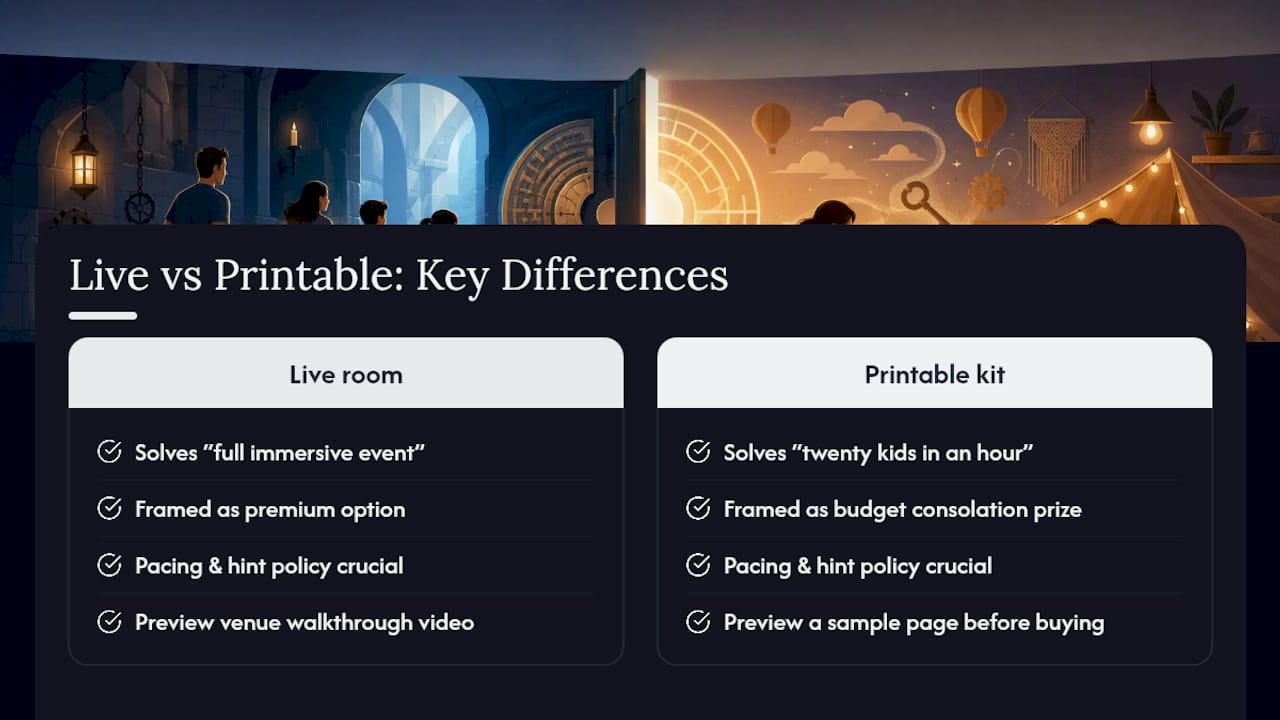
What gets overlooked most: pacing and hint policy matter more than theme dressing or prop budget. A gorgeous room with a confusing clue order frustrates families faster than a plain printable with a clean, linear structure. If you take one thing from this guide, prioritize how an experience paces itself, live or DIY, before you evaluate how it looks.
Preview whatever you can before committing, whether that is a venue’s walkthrough video or a sample page from a printable kit. It costs nothing and tells you more than any difficulty puzzle breakdown or star rating.
— CodeBusters
Ready for the Real Thing? Book a Live Space Mission
Reading about puzzle mechanics only gets you so far. If your family or group wants the actual locked-door tension, working props, and a game master reacting in real time, that is what Codebusters Escape Room builds for every session. Our themed rooms are designed for private bookings and scale difficulty and pacing to fit various types of groups.
Whether you are planning a birthday celebration, a family night out, or a team-building outing, our Colorado Springs locations offer packages built around group size and schedule. Gift vouchers are available too, if you would rather let someone else pick their own mission. Check availability and book your session with Codebusters Escape Room to lock in your preferred date before it fills up.
Sources
- Free Escape Room | Printable Space Adventure for Kids
- CloudPano 360 tour (example of venue walkthrough content)