Why Escape Rooms Suit Surprise Parties: 2026 Guide
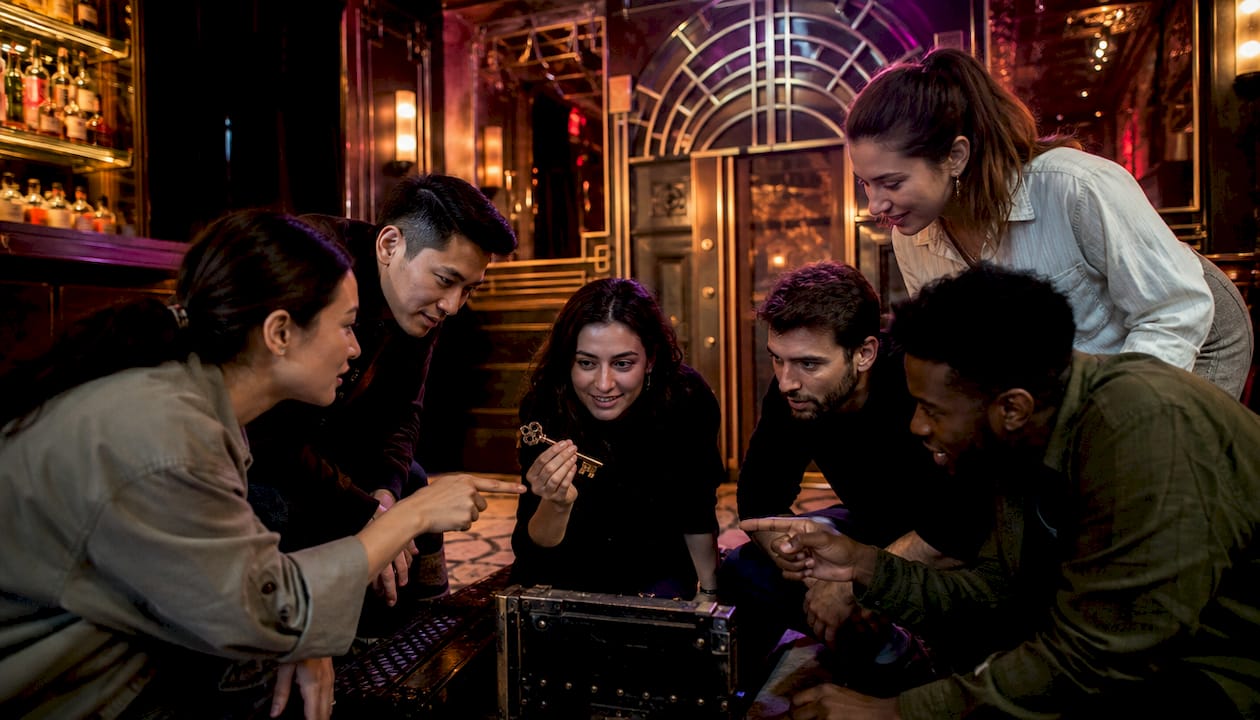
Escape rooms are defined as timed, immersive group challenges where participants solve interconnected puzzles to complete a shared objective. That structure makes them a natural fit for surprise parties, and the reasons go deeper than novelty. A typical escape room experience runs about 60 minutes of active gameplay, with the full visit reaching 90 minutes when you include briefing and debrief. That sustained engagement window gives every guest a shared story to walk away with, something a dinner reservation or movie night rarely delivers. Codebustersescaperoom, based in Colorado Springs, has seen firsthand how this format turns a surprise gathering into a genuinely memorable event.
Why escape rooms suit surprise parties better than traditional activities
The core reason escape rooms work so well for surprise parties is that they replace passive attendance with active participation. At a dinner or a bar, guests sit and talk. In an escape room, they hunt for clues, decode ciphers, and shout solutions across the room. That shift from observer to participant changes the entire social dynamic of the event.
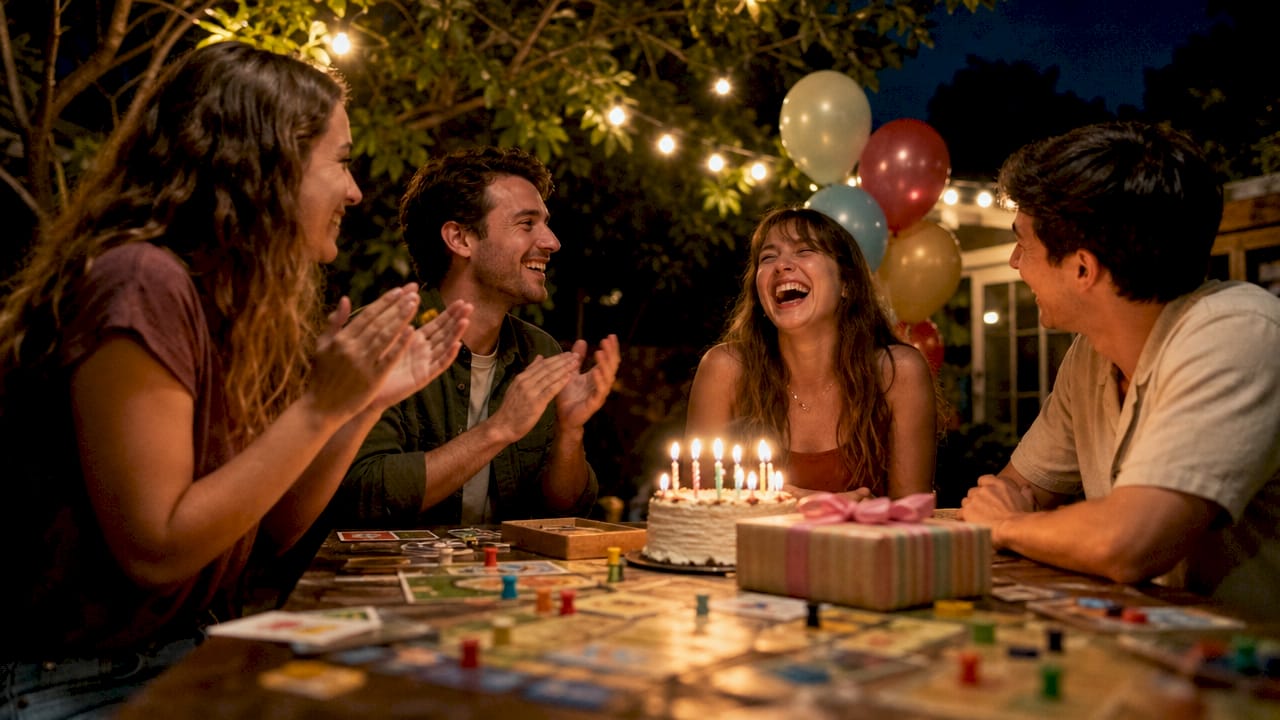
Collaborative tasks in escape rooms boost communication and social connection, even among strangers. That finding matters enormously for surprise parties, where the guest list often mixes coworkers, old friends, and family members who have never met. The shared goal of escaping the room gives everyone an immediate reason to talk, cooperate, and trust each other.
A 2026 Springer Nature study found that immersive multi-user environments encourage social belonging and connection. That psychological safety is exactly what a surprise party needs. Guests who feel included from the first minute are far more likely to relax, open up, and enjoy themselves.
The contrast with passive entertainment is stark. A movie requires silence. A dinner can split into small side conversations. An escape room demands that the whole group work together, which means no one gets left out of the action.
Key reasons escape rooms outperform traditional surprise party activities:
- Every guest must contribute, so no one fades into the background.
- Puzzle-solving creates natural conversation starters between people who have just met.
- The timed pressure adds excitement without requiring any prior skill or knowledge.
- The shared win or near-win becomes an instant inside joke for the group.
Pro Tip: Book a room with a cooperative theme rather than a competitive one. Cooperative formats keep the group united and prevent the party from splitting into rival factions.
How to tailor the escape room experience for any group
Escape rooms are highly customizable, with difficulty levels and themes that scale to fit children, teens, and adults in the same session. That flexibility is what separates escape rooms from most other group activities, which tend to favor one age bracket or skill level over another.
Choosing the right room is the single most important planning decision you will make. A horror-themed room with jump scares and graphic imagery will alienate younger guests and anyone sensitive to intense content. A mystery or adventure theme, on the other hand, draws in nearly every age group without making anyone uncomfortable.
Pro Tip: Ask the venue directly about the difficulty rating and any content warnings before booking. Codebustersescaperoom offers themed rooms like “Stranger 80’s” and “Past to the Future” that balance challenge with broad appeal, making them strong picks for mixed-age groups.
Experienced organizers advise choosing rooms that emphasize collaboration and rewarding “aha!” moments over pure difficulty. That approach keeps the energy positive and makes sure the guest of honor feels celebrated rather than stressed.
Practical factors to check before booking:
- Group size: Confirm the room’s minimum and maximum player count matches your headcount.
- Difficulty level: Opt for beginner or intermediate ratings for mixed groups.
- Theme content: Avoid horror, gore, or heavily competitive formats for general parties.
- Physical requirements: Check whether the room involves crawling, climbing, or tight spaces that could exclude some guests.
- Age restrictions: Verify minimum age requirements if children are attending.
The role of collaboration in escape rooms is most rewarding when the room’s design rewards group input rather than individual brilliance. Rooms built around observation, logic, and communication give every personality type a chance to shine.
How to enhance the surprise with private bookings and personalized elements
Private bookings are the foundation of a successful surprise party escape room experience. Most venues offer private room options, and booking a private room is the single best way to protect the surprise and keep the group’s energy focused. Mixing your party with strangers breaks the intimacy of the event and risks spoiling the reveal before it happens.
Beyond privacy, escape rooms offer something almost no other venue can: the ability to hide personalized surprises inside the game itself. Game masters can incorporate hidden gifts or clues into the final puzzle, turning the escape room’s climax into a second surprise moment. Imagine the guest of honor unlocking the last box and finding a birthday message, a ring, or a keepsake tucked inside.
Planning the logistics well makes the whole experience feel effortless. Follow these steps to get it right:
- Contact the venue at least two weeks in advance. Explain that this is a surprise party and ask what personalization options are available.
- Arrange a cover story for the guest of honor. Tell them you are going to “a group activity” or “a night out” to keep the destination secret until arrival.
- Coordinate arrival times. Have other guests arrive 10 minutes early so the group is assembled before the guest of honor walks in.
- Brief the game master on the occasion. A good game master will adjust their introduction and energy to match the celebratory mood.
- Plan for the full 90-minute window. Account for the pre-game briefing, the 60-minute session, and the post-game debrief when scheduling dinner or other activities afterward.
Contacting the venue ahead of time to incorporate personalized elements in the puzzle design is one of the most effective ways to elevate the emotional impact of the party. It turns a fun activity into a genuinely touching moment.
What lasting benefits do escape rooms offer for surprise party groups?
Escape rooms create shared victories that outlast the party itself. Unlike a dinner where the conversation fades by the next morning, the memory of cracking a cipher together or finding a hidden compartment stays vivid for weeks. Those inside jokes and joint achievements build stronger group bonds than almost any other social activity.
Active engagement also produces a stronger emotional imprint than passive entertainment. When guests solve a puzzle, they feel a genuine sense of accomplishment. That feeling attaches itself to the occasion and to the people they shared it with.
“Escape rooms transform ordinary parties into hero-driven adventures, giving every guest a role in a story they will retell long after the night ends. The shared narrative becomes the party’s lasting legacy.”
The table below compares how escape rooms stack up against common surprise party formats on the dimensions that matter most for group bonding.
| Factor | Escape room | Dinner or bar | Movie or show |
|---|---|---|---|
| Active participation | All guests involved | Varies by seating | Passive only |
| Social bonding speed | Fast, within minutes | Slow, depends on conversation | Minimal during event |
| Shared memory created | Strong, story-driven | Moderate | Low |
| Inclusive for mixed ages | Yes, with right room | Yes | Yes |
| Personalization options | High | Low to moderate | Very low |
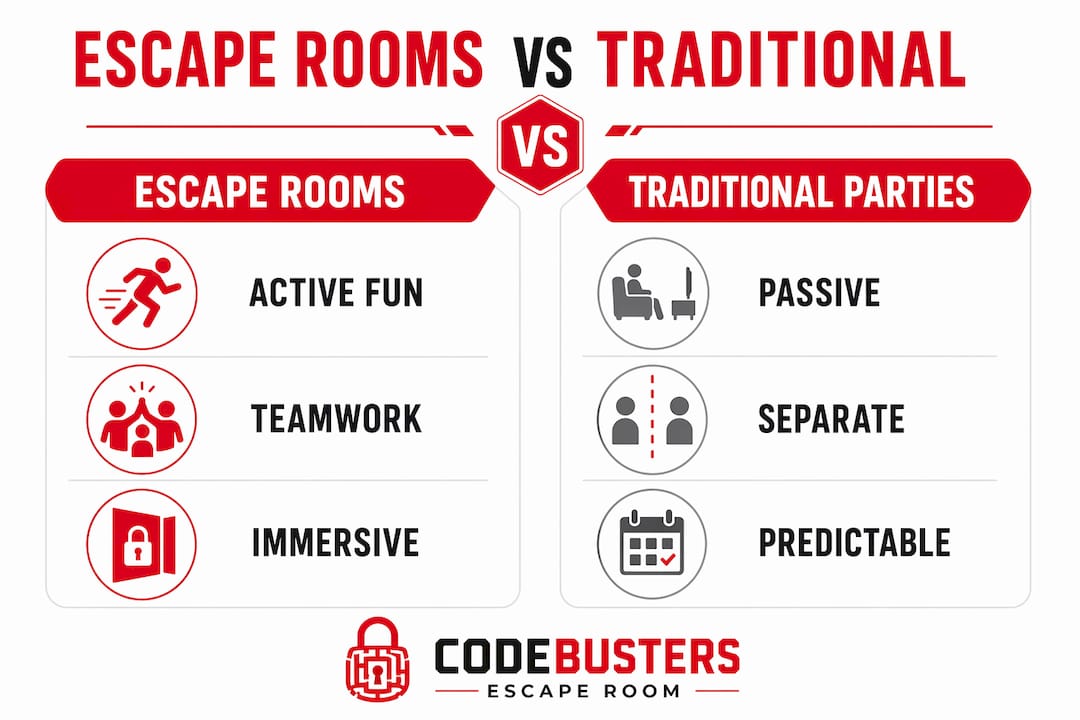
Group escape rooms unlock connection and skills that passive celebrations simply cannot replicate. The experience gives the group a shared identity, a story that starts with “remember when we were locked in that room” and never really ends.
Key Takeaways
Escape rooms suit surprise parties because they replace passive attendance with active, story-driven collaboration that creates lasting memories for every guest.
| Point | Details |
|---|---|
| Active participation wins | Escape rooms require every guest to contribute, eliminating the social sidelines that passive events create. |
| Private bookings protect the surprise | Booking a private room keeps the group together and prevents strangers from diluting the experience. |
| Personalization adds emotional depth | Game masters can hide gifts or messages inside puzzles to create a second, genuine surprise moment. |
| Room selection determines enjoyment | Choose collaborative, beginner-friendly themes and avoid horror formats for mixed-age groups. |
| Shared victories build lasting bonds | The group narrative from an escape room outlasts any dinner conversation and becomes a lasting inside joke. |
What I have learned from planning escape room surprise parties
After years of watching groups walk into themed rooms nervous and walk out laughing, I have formed a clear opinion: the escape room format is not just a fun option for surprise parties. It is the best option for groups that include people who do not know each other well.
The mistake most planners make is treating the room selection as an afterthought. They book the first available slot without asking about difficulty, theme content, or personalization options. That shortcut almost always produces a group that is either bored because the puzzles are too easy or frustrated because the room is too hard. Neither outcome serves the guest of honor.
The planners who get it right spend 15 minutes on the phone with the venue before booking. They ask about the room’s narrative, the difficulty curve, and whether the game master can incorporate a personal touch. That conversation costs nothing and changes everything about the experience.
Choosing themes that promote group fun over individual competition is the other factor most people overlook. A room where one person solves everything while others watch is just a dinner party with worse lighting. The best rooms distribute the puzzles so that different people find different clues, and the group has to combine their discoveries to move forward. That design forces connection, and connection is exactly what a surprise party is supposed to create.
— CodeBusters
Codebustersescaperoom: private escape rooms for your next surprise party
Codebustersescaperoom in Colorado Springs offers private room bookings designed specifically for groups who want a focused, memorable experience without outside interruptions.
Themed rooms like “Past to the Future,” “Stranger 80’s,” and “Flight of Deception” each offer distinct narratives and difficulty levels, so you can match the room to your group’s age range and energy. The staff at Codebustersescaperoom works with party planners ahead of time to incorporate personalized touches into the game. Whether you are planning a birthday, an anniversary, or a milestone celebration, book your private room and let the game master handle the rest.
FAQ
Why are escape rooms good for surprise parties?
Escape rooms replace passive socializing with active, goal-driven teamwork that naturally breaks the ice and creates shared memories. The 60-minute gameplay window gives every guest a story to tell long after the party ends.
How long does a surprise party escape room visit take?
A standard session runs about 60 minutes of gameplay, with the full visit reaching 90 minutes when you include the pre-game briefing and post-game debrief. Plan your dinner or follow-up activities accordingly.
Can escape rooms accommodate mixed-age groups?
Yes. Rooms scale in difficulty and theme to suit children, teens, and adults together. Choose beginner or intermediate rooms with adventure or mystery themes and avoid horror formats for the best results.
Should I book a private room for a surprise party?
Private bookings are the right choice for surprise parties. They keep the group together, prevent mixing with strangers, and give the game master the freedom to incorporate personalized surprises into the experience.
Can the game master hide a gift inside the escape room?
Many venues allow game masters to hide personalized gifts or messages inside the final puzzle. Contact the venue at least two weeks before your event to arrange this and confirm what options are available.