The Role of Celebration in Escape Rooms and Bonding
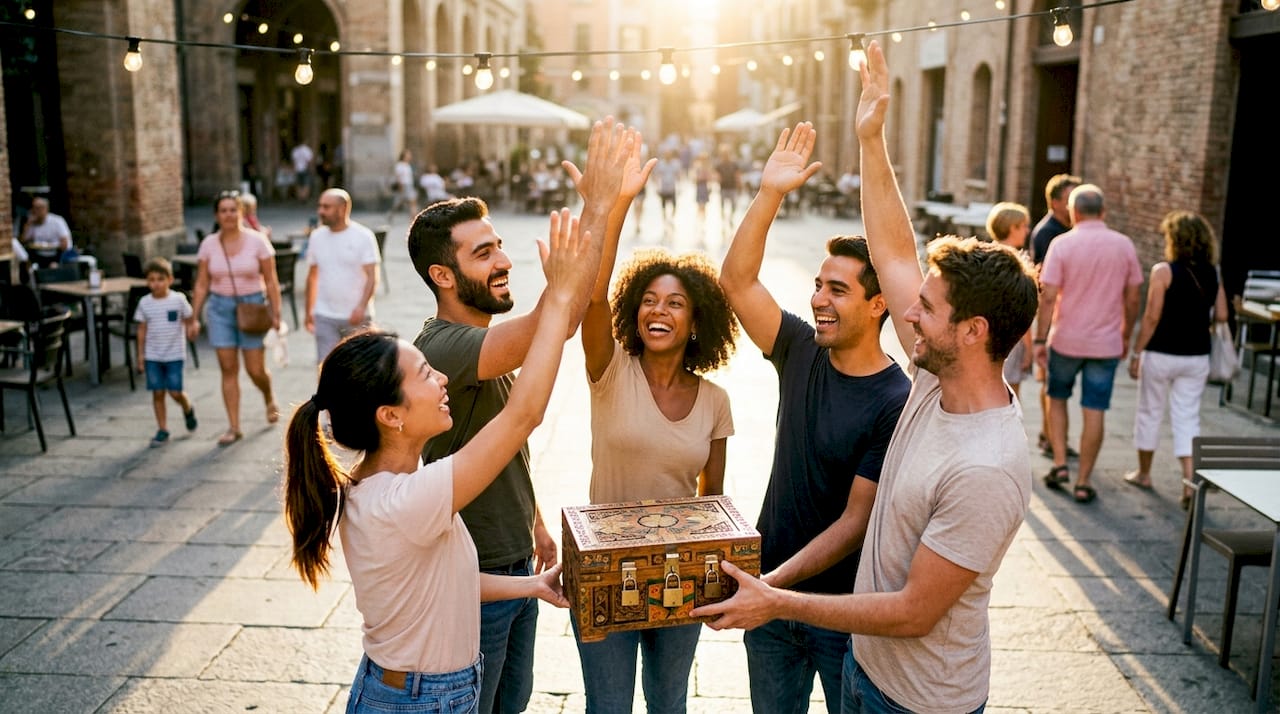
Celebration in escape rooms is the social and psychological mechanism that transforms a shared challenge into a lasting group memory. The role of celebration in escape rooms goes far beyond a high-five at the finish line. It activates biological reward systems, cements group identity, and creates the emotional peak that participants remember long after the puzzles fade. Neuroscience confirms that shared victories build connection by triggering dopamine and oxytocin release at the moment of success. Codebustersescaperoom, an award-winning escape room venue in Colorado Springs, designs its experiences with this full arc in mind, from the first clue to the final cheer.
How does celebration enhance teamwork in escape rooms?
Celebration is the social glue that holds a group together after the pressure lifts. When a team escapes a room, the shared emotional high creates what psychologists call a “tribe moment.” Every member contributed, every member suffered the clock, and every member now shares the win. That shared narrative is the foundation of real group cohesion.
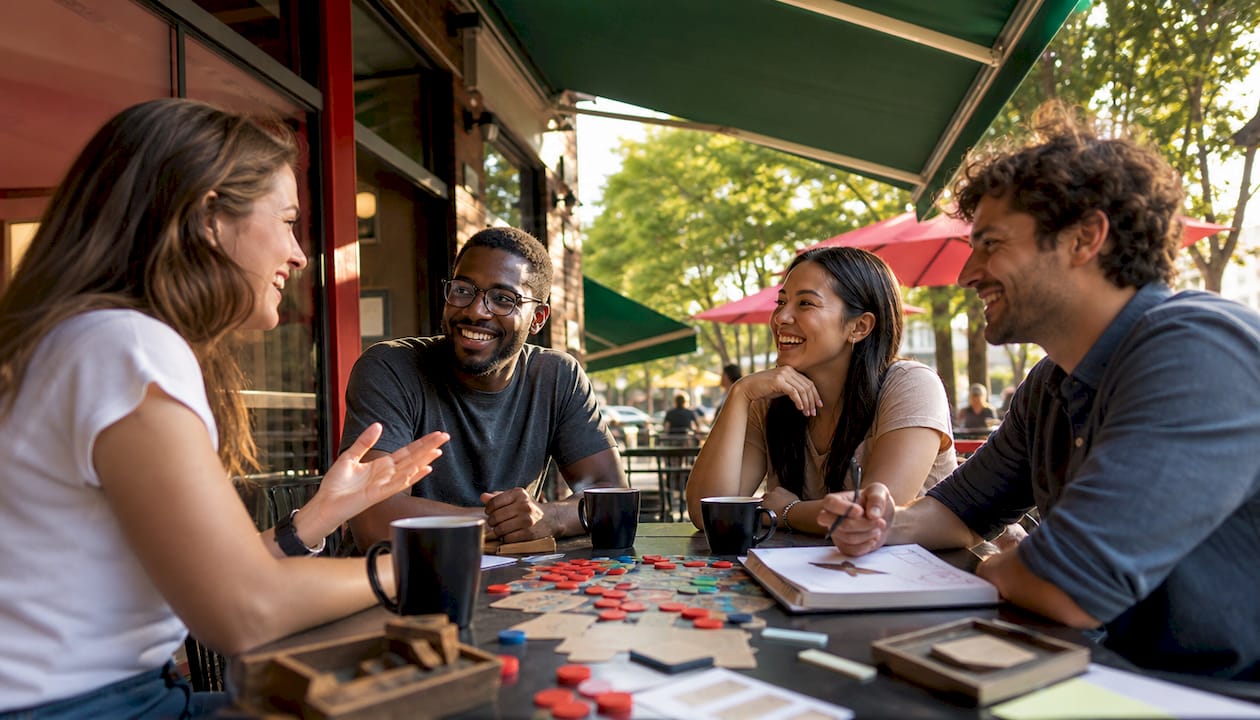
The chemistry behind this is concrete. Micro-rewards throughout the game trigger dopamine and oxytocin release, transforming stress into trust and turning strangers into cohesive teams. Dopamine is the brain’s reward signal. Oxytocin is the bonding chemical released during moments of connection and cooperation. Together, they rewire how participants feel about each other.
Escape rooms also force immediate cooperation under pressure. The ticking clock not only adds stress but forces immediate cooperation, creating a shared high-stakes narrative that deepens relationships quickly. When celebration follows that pressure, the relief and joy amplify the bonding effect. The group does not just feel happy. They feel happy together, and that distinction matters.
Escape rooms build team collaboration by encouraging active cooperation, celebrating small wins, and supporting recovery from mistakes in real time. Each small puzzle solved is a mini-celebration. Each “aha” moment shared between two teammates is a bonding event. By the time the final door opens, the group has already accumulated dozens of micro-bonds.
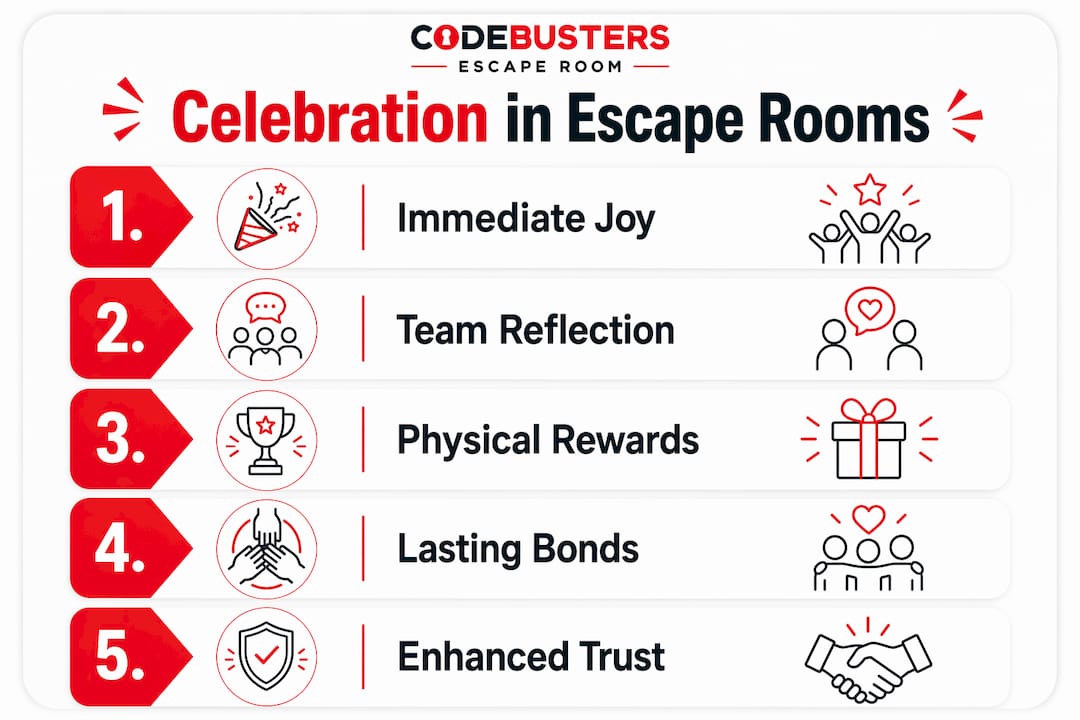
Pro Tip: Ask your group to name one moment during the game where a teammate surprised them. This single question during the post-game period triggers gratitude and deepens the bonding effect of the celebration.
Key behaviors that celebration reinforces in escape room groups:
- Trust: Surviving shared stress and then celebrating together signals that the group can rely on each other.
- Recognition: Calling out individual contributions during the debrief makes each person feel valued and integral to the win.
- Collective identity: Shared language, inside jokes, and references to specific puzzle moments create a group story that outlasts the event.
- Emotional safety: Celebrating mistakes as part of the journey reduces defensiveness and builds psychological safety for future collaboration.
What forms of celebration work best after escape rooms?
The most effective post-game celebration combines immediate emotional release with structured reflection. Post-game social periods of 30–60 minutes are common in successful event plans to reinforce bonding. That window is not downtime. It is the most productive bonding period of the entire event.
The debrief is the single most underused tool in escape room celebration. Successful groups use 10–15 minutes for discussion, not just a winner’s photo. Talking through which puzzles stumped the group, who cracked the key clue, and what strategy worked best encodes the experience into long-term collective memory. It also gives quieter team members a chance to be recognized.
Tangible celebratory elements add a physical anchor to the memory. Certificates, themed snacks, and props in events help solidify collaborative memories for participants. A printed certificate feels trivial until someone pins it to their office wall three months later and tells the story again. That is the long-term value of a physical marker.
| Celebration type | Best for | Primary outcome |
|---|---|---|
| Post-game debrief (10–15 min) | All groups | Memory encoding, recognition |
| Group photo with props | Casual and birthday groups | Shareable memory, social proof |
| Completion certificates | Corporate and team-building groups | Recognition, tangible achievement |
| Themed snacks or drinks | Parties and anniversary events | Sensory memory, relaxed bonding |
| Facilitator-led reflection | Large corporate groups | Structured learning, leadership insight |
Pro Tip: For corporate groups, ask the game master to note two or three specific moments of strong teamwork during the game. Sharing those observations during the debrief gives the celebration a factual, personalized foundation that generic praise cannot match.
Why does the timing of celebration matter so much?
The peak moment immediately after escape is the highest-value window for celebration. At that instant, the group’s neurochemical state is primed. Dopamine is elevated from the solved puzzle. Oxytocin is flowing from the shared relief. Delaying celebration by even a few minutes allows that chemical state to dissipate, and the bonding opportunity weakens with it.
Game masters manage this arc deliberately. Game masters curate group emotional flow to avoid dopamine “kill” or frustration crashes, with hints and game events timed for optimal neurochemical engagement. A skilled game master does not just watch the clock. They read the room’s energy and pace the experience to build toward a satisfying peak.
Premature celebration carries its own risk. If a game master or facilitator celebrates too early, before the group has genuinely earned the win, the dopamine hit feels hollow. The group senses the artificiality. Conversely, a delayed or muted response after a genuine escape deflates the emotional peak before it can be shared.
The optimal celebration sequence follows this pattern:
- Immediate acknowledgment: The game master confirms the escape and delivers a clear, enthusiastic response within seconds of the final puzzle being solved.
- Group release: Allow 2–3 minutes of unstructured celebration. Cheering, hugging, and spontaneous reactions are neurologically necessary.
- Transition to debrief: Move the group into a comfortable space within 5 minutes. The emotional state is still elevated and receptive.
- Structured reflection: Use the 10–15 minute debrief window to anchor the experience in memory and recognize individual contributions.
- Extended social period: Transition to food, drinks, or a private event space for the 30–60 minute bonding window.
Overcoming puzzles increases feelings of competence and momentum, fostering emotional satisfaction that enhances trust within the group. Timing the celebration to catch that peak competence feeling is what separates a memorable event from a forgettable one.
How to integrate celebration into group events and parties
Structured celebration turns an escape room booking into a complete group event. The game is the catalyst. The celebration is the experience. Groups planning birthdays, anniversaries, or corporate outings get the most value when they treat the post-game period as a scheduled part of the event, not an afterthought.
A practical framework for integrating celebration into group events:
- Book a private room. Private bookings give the group full control over the post-game space and eliminate the awkward transition to a public area. Codebustersescaperoom offers private room bookings designed for exactly this purpose.
- Plan the debrief before you arrive. Assign one person to lead the post-game discussion. Prepare two or three questions in advance, such as “What was the hardest moment?” and “Who made the biggest difference?”
- Bring or order themed elements. Themed snacks, custom decorations, or a cake tied to the room’s theme extend the immersive experience into the celebration period.
- Schedule the social window. Block 45 minutes after the game for unstructured socializing. Do not rush this period. The group bonding experience deepens significantly during relaxed post-game conversation.
- Capture the moment. Arrange a group photo immediately after the escape, while energy is highest. Use the room’s props or themed elements as photo backdrops.
- Close with recognition. End the event by naming one contribution from each participant. This takes three minutes and leaves every person feeling seen and valued.
For corporate teams, the celebration period is where the team-building ROI actually materializes. Escape room puzzles’ unpredictability and earned rewards generate a psychological connection to shared accomplishment and team pride. Discussing that accomplishment in a structured debrief translates the game’s lessons into workplace language. Teams leave not just bonded but with a shared reference point they can draw on for months.
Key Takeaways
Celebration is not the finale of an escape room experience. It is the mechanism that makes the experience worth having in the first place.
| Point | Details |
|---|---|
| Celebration triggers bonding chemistry | Dopamine and oxytocin released at the peak moment create real neurochemical bonds between participants. |
| Timing is the critical variable | The 5-minute window immediately after escape is the highest-value bonding opportunity of the entire event. |
| Debrief beats the photo | A 10–15 minute structured reflection encodes the experience into long-term collective memory more effectively than any photo. |
| Tangible markers extend the memory | Certificates, themed snacks, and props give the group a physical anchor that retells the story long after the event. |
| Plan celebration before you arrive | Pre-scheduled social windows and assigned debrief leaders produce measurably stronger group outcomes than spontaneous post-game periods. |
What I’ve learned about celebration after watching hundreds of groups
Most groups walk out of an escape room and immediately check their phones. That is the single biggest waste of a bonding opportunity I have seen. The neurochemical window is open for roughly five minutes after the final puzzle clicks. What happens in those five minutes determines whether the event becomes a story the group tells for years or just another Tuesday night out.
Corporate groups and casual groups celebrate very differently, and neither approach is automatically better. Corporate teams tend to underperform in the unstructured release phase because they are conditioned to suppress spontaneous emotion at work. Casual groups, on the other hand, often skip the debrief entirely and miss the deeper reflection that cements the experience. The best events blend both: a moment of genuine, unfiltered celebration followed by a brief, structured conversation.
The post-game debrief is the secret ingredient that most groups never use. Asking “Who surprised you today?” or “What was the moment you thought we were done?” costs nothing and produces conversations that would never happen in a normal social setting. Those conversations are where real trust is built. The escape room creates the conditions. The celebration and debrief harvest the result.
Facilitators and game masters carry more responsibility than most participants realize. A game master who delivers a flat, scripted “congratulations” after an escape kills the peak moment. One who delivers a genuine, specific, energetic acknowledgment of what the group just accomplished amplifies it. At Codebustersescaperoom, we train for that moment because we know it is the hinge point of the entire experience.
— CodeBusters
Codebustersescaperoom: where the game and the celebration both matter
Codebustersescaperoom in Colorado Springs builds its escape room experiences with the full event arc in mind, from the first locked door to the last post-game laugh.
Private room bookings give your group the space to celebrate without interruption. Themed rooms like “Stranger 80’s,” “Past to the Future,” and “Flight of Deception” each create a distinct shared story that fuels the post-game conversation. Whether you are planning a birthday, a corporate outing, or a family adventure, the team-building experience at Codebustersescaperoom is designed to deliver both the challenge and the celebration. Visit Codebustersescaperoom to book your private experience and give your group a memory worth celebrating.
FAQ
What is the role of celebration in escape rooms?
Celebration in escape rooms is the social and neurochemical process that converts shared stress into lasting group bonds. It activates dopamine and oxytocin at the peak moment of success, creating the emotional foundation for stronger relationships.
How long should the post-game celebration last?
Post-game social periods of 30–60 minutes are standard in well-planned escape room events. This window includes an immediate debrief of 10–15 minutes followed by unstructured social time.
Do prizes improve the escape room experience?
The role of prizes in escape room play is primarily symbolic. Completion certificates and themed mementos serve as physical anchors for the shared memory, which strengthens the group’s connection to the experience over time.
Why does the timing of celebration affect bonding?
The five minutes immediately after escape represent the highest neurochemical peak of the event. Celebrating within that window captures the dopamine and oxytocin surge, which directly strengthens the emotional bonds formed during the game.
How can corporate teams get more from escape room celebrations?
Corporate teams benefit most from a structured debrief led by a designated facilitator. Asking specific questions about individual contributions and key puzzle moments translates the game’s lessons into workplace-relevant insights that strengthen team performance.