The Role of Actors in Escape Rooms: Full Guide
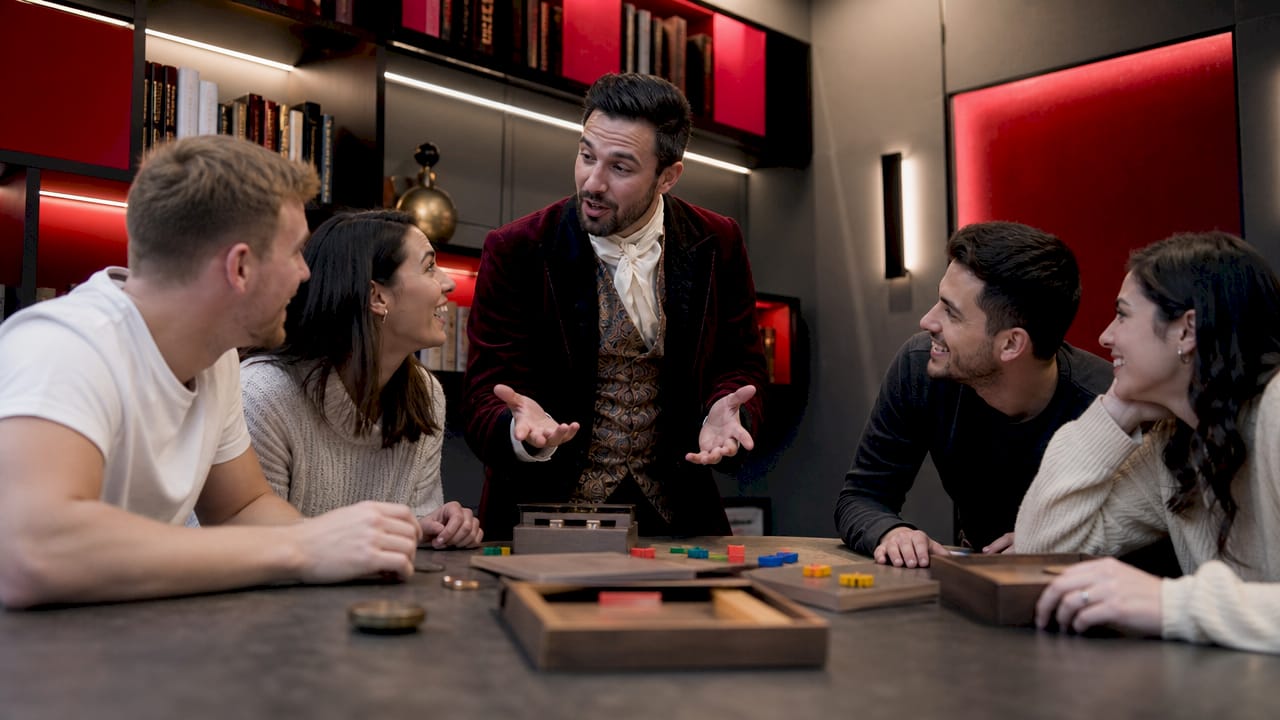
Live actors in escape rooms are defined as performers who physically inhabit the game space to embody characters, guide players, and drive the narrative forward in real time. The role of actors in escape rooms goes far beyond jump scares and horror themes. Actors serve as guides, allies, antagonists, and narrators across every genre, from family adventures to corporate thrillers. Escape rooms with live actors typically dedicate about 70% of playtime to puzzles and 30% to actor-driven scenes at key intervals. That split shows how actors shape the rhythm of the entire experience without overwhelming the puzzle challenge at its core.
What is the role of actors in escape rooms?
Actors transform a static set of puzzles into a living story. They do this by portraying characters who react to player decisions, shift the emotional tone of a scene, and keep the narrative moving forward. Without a live performer, the story exists only as text on a wall or a pre-recorded voice. With one, the story breathes.
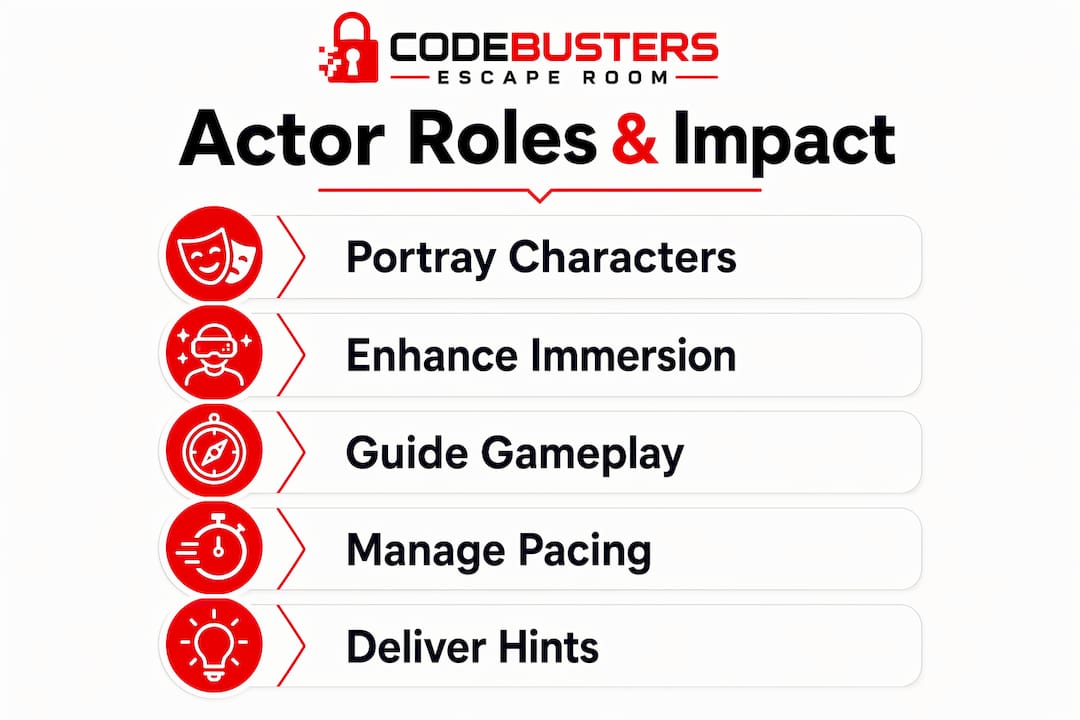
Integrating live actors transforms static puzzles into living stories where players react to unpredictable characters, applicable to horror or family-friendly themes. That unpredictability is the key word. No two groups play the same session, because no two groups behave the same way. The actor reads the room and responds accordingly, making each playthrough genuinely unique.
The industry term for this format is “immersive theater escape,” a hybrid of puzzle game and live performance. You will hear it used alongside the broader phrase “actor-driven escape room.” Both refer to the same core concept: a performer who is physically present and narratively active throughout the session.
Pro Tip: If you are planning a corporate event or group outing, ask the venue whether their actors follow a logic map or a rigid script. Logic-map actors adapt to your group’s pace. Scripted actors may feel mechanical if your team moves faster or slower than expected.
Here is what actors specifically do during a session:
- Establish atmosphere from the moment players enter the room
- Deliver narrative exposition that would otherwise appear as written text
- React to player choices, making decisions feel meaningful
- Manage emotional pacing, raising or lowering tension as needed
- Provide adaptive hints without breaking the fourth wall or solving puzzles outright
The role of storytelling in escape rooms depends heavily on who is telling it. A live actor delivers that story with tone, body language, and timing that no printed clue can replicate.
How do actors enhance immersion and emotional engagement?
Actors maintain what game designers call the “Magic Circle,” the invisible story boundary that keeps players emotionally committed from start to finish. Actors act as Psychological Directors to maintain this boundary, ensuring players never fully step outside the fiction. The moment a player starts thinking about the real world, the experience loses its grip. A skilled actor prevents that break.
Live interaction adds a layer of unpredictability that pre-programmed elements cannot match. A puzzle has one correct solution. An actor has infinite possible responses. When a player tries something unexpected, the actor can acknowledge it, redirect it, or use it to deepen the story. That flexibility creates emotional investment that players remember long after the session ends.
Actors also blur the line between player reality and game narrative. When a character pleads for help or reacts with genuine fear, players instinctively respond as if the stakes are real. Player decisions shape unique story versions as actors introduce surprise and adapt to player reactions, enhancing replayability and emotional investment. That is why groups who play actor-driven rooms often describe the experience as something they “lived through” rather than just “completed.”
Non-horror examples make this point clearly. A friendly scientist character who grows increasingly panicked as the countdown nears zero creates urgency without fear. A wise mentor figure who drops cryptic hints builds curiosity and trust. These roles show that actors are not limited to horror genres. They can provide humor, atmosphere, or narrative guidance suitable for family-friendly experiences.
What types of actor roles exist in escape rooms?
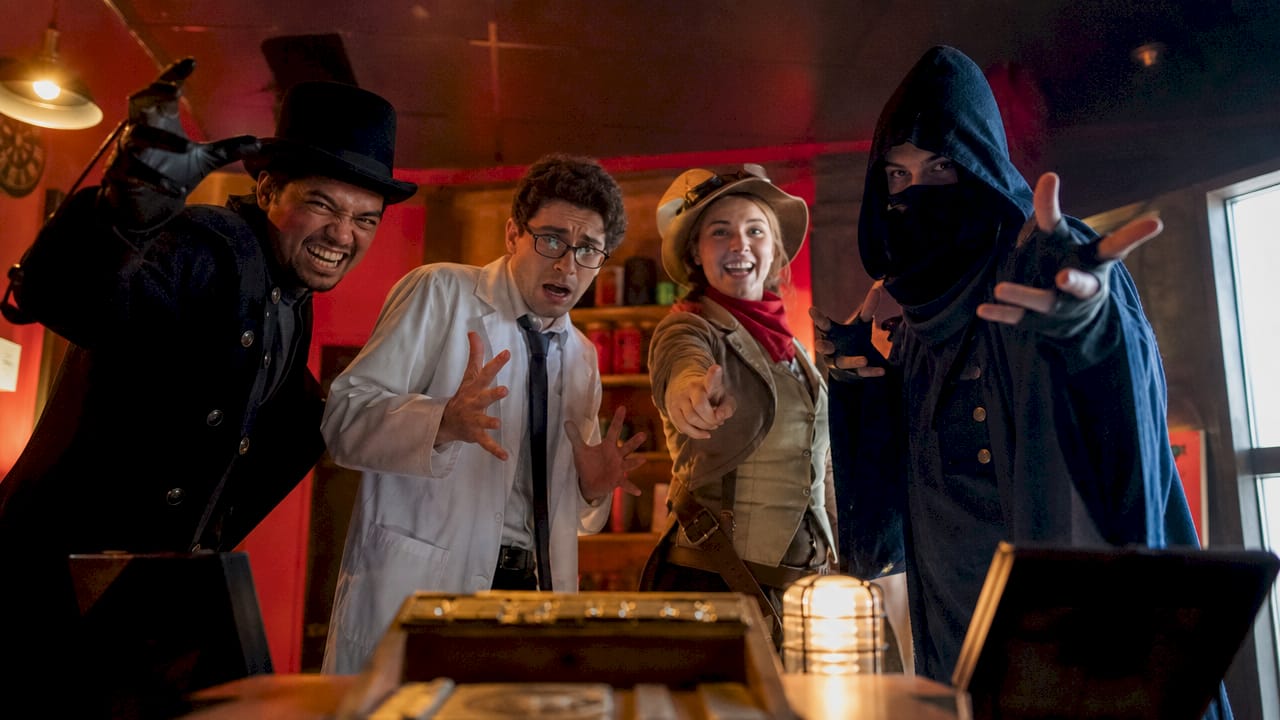
Escape room actors take on four primary role categories, each with a distinct function in the gameplay experience.
| Role type | Primary function | Example |
|---|---|---|
| Villain or antagonist | Creates conflict and raises stakes | A corrupt detective who threatens players |
| Guide or mentor | Delivers exposition and subtle hints | A trapped scientist who briefs the team |
| Neutral narrator | Maintains atmosphere without taking sides | A ghost who observes and comments |
| Ally or helper | Collaborates with players to solve the story | A fellow prisoner who needs rescuing |
Each role type requires a different performance style. Villains need to escalate tension without triggering genuine distress. Guides need to inform without solving. Narrators need presence without interference. Allies need to feel dependent without slowing the team down.
Game Masters and live actors differ fundamentally: Game Masters operate remotely managing technical flow, while live actors physically inhabit the game to drive the narrative and interact directly. This distinction matters for event planners. A Game Master can monitor multiple rooms simultaneously and deliver hints through a speaker system. A live actor can only be in one place, but their impact on immersion is far greater.
Actors also function as pacing managers. When a team races ahead, an actor can slow the narrative with a dramatic monologue or a new complication. When a team stalls, the actor can introduce urgency through character behavior. The actor’s role in managing game flow through subtle narrative cues is essential to maintaining player “flow,” the optimal balance of challenge and skill engagement.
The distinction between a live actor and a remote Game Master also affects player psychology. Players behave differently when a real person is in the room. They communicate more, commit harder to the fiction, and feel greater accountability to the story’s outcome. That shift in behavior is one reason actors drive social interaction and team negotiation far more effectively than automated systems.
How do actors affect gameplay and player decisions?
Actors change how players make decisions during a session. When a character reacts to a choice, that choice feels consequential. Players slow down, discuss options, and commit more deliberately. That shift in decision-making quality improves both the experience and the team’s performance.
Here is how actors create practical impact during gameplay:
- Replace visible countdown clocks. Actors replace digital countdown clocks with character-driven urgency, making the perception of time psychological and enhancing immersion. A clock on the wall reminds players they are in a game. A character who grows visibly desperate reminds them they are in a story.
- Deliver adaptive hints. An actor can phrase a hint as a character’s desperate plea or a villain’s taunt. The information reaches the player without breaking the fiction.
- Create surprise encounters. An actor entering a room unexpectedly resets the group’s emotional state. It forces players to reassess their situation and re-engage with the narrative.
- Manage tension peaks. Skilled actors know when to escalate and when to release pressure. That rhythm prevents player burnout and keeps energy levels high through the final puzzle.
- Reinforce team roles. When an actor addresses specific players by their in-game role, it strengthens individual investment and encourages team communication across the group.
The success of live-actor escape rooms depends on actors understanding the game’s mechanics deeply, enabling dynamic adaptation to the team’s pace and balanced interaction. An actor who does not understand the puzzles cannot hint effectively. An actor who does not understand the narrative cannot escalate tension at the right moment.
Pro Tip: Event planners booking actor-driven rooms for corporate groups should request a pre-session briefing. Knowing the actor’s role type and interaction style helps team leaders prepare participants and set the right expectations.
What design challenges come with using actors in escape rooms?
Designing an escape room around live actors requires solving problems that purely mechanical rooms never face. The actor is a variable. Every performance differs slightly, and that variability must be managed without removing the spontaneity that makes live actors valuable.
Designers equip actors with logic maps rather than scripts, allowing them to dynamically adjust interactions based on player progress to maintain pacing and narrative coherence. A logic map defines what the actor does when the team is ahead, on pace, or behind. It gives the actor decision points rather than lines. That structure preserves flexibility while preventing the session from derailing.
Key design considerations for integrating actors include:
- Training actors in game mechanics. An actor must know every puzzle solution, every clue location, and every narrative branch before entering the room.
- Setting clear interaction boundaries. Actors should never solve puzzles for players, even indirectly. The line between a hint and a giveaway must be defined in training.
- Managing player expectations. Live actors are clearly labeled as immersive experiences to inform players’ choices. Venues that disclose actor presence upfront attract players who are ready to engage with the format.
- Establishing safety protocols. Players must have a clear, in-character or out-of-character signal to pause the experience if they feel uncomfortable. Actors need to recognize and honor that signal immediately.
- Balancing actor influence. Too much actor involvement makes the puzzle feel trivial. Too little makes the actor feel like set decoration. The balance point is where the actor enhances the challenge without replacing it.
Escape room acting requires balancing scripted performance with improvisation to ensure player engagement without predictability or frustration. That balance is the hardest skill to teach and the most important one to get right.
Key Takeaways
Live actors are the single most powerful tool for turning an escape room puzzle set into a fully immersive narrative experience that players remember and revisit.
| Point | Details |
|---|---|
| Actors define the story | Live performers deliver narrative, atmosphere, and emotional stakes that props and text cannot replicate. |
| Role variety matters | Actors serve as villains, guides, allies, or narrators, each requiring a distinct performance approach. |
| Pacing is their core skill | Actors use logic maps to adjust interaction speed based on where the team stands in the game. |
| They replace mechanical immersion-breakers | Character-driven urgency removes the need for visible countdown clocks and automated hint systems. |
| Design and training are non-negotiable | Actors must understand every puzzle and narrative branch before entering the room. |
Why actors are the most underrated element in escape room design
After watching hundreds of groups move through escape rooms, the pattern is clear: the sessions players talk about for weeks are almost always the ones with a live actor. Not because the puzzles were harder or the set was more elaborate. Because a real person looked them in the eye and made the story feel true.
The industry still treats actors as a premium add-on rather than a core design element. That is a mistake. A well-trained actor with a logic map and deep knowledge of the game’s mechanics does more for player satisfaction than any single prop or puzzle upgrade. The actor is the connective tissue between every element in the room.
What surprises most event planners is how well actors work in non-horror contexts. A family adventure room with a friendly wizard character creates the same emotional commitment as a horror room with a villain. The genre is irrelevant. The human connection is what drives engagement. Codebustersescaperoom has built its themed rooms around exactly this principle, using narrative and character to give every puzzle a reason to matter.
The future of escape room design points toward deeper actor integration, not less. As players become more experienced and harder to surprise with puzzles alone, the live performer becomes the irreplaceable differentiator. No algorithm replicates the moment an actor breaks character just enough to make a player feel genuinely seen inside the story.
— CodeBusters
Actor-driven experiences at Codebustersescaperoom
Codebustersescaperoom in Colorado Springs builds its rooms around the principle that story and character drive the best escape experiences.

Rooms like “Stranger 80’s” and “Flight of Deception” use layered narratives and character-driven moments to pull players deeper into the game. The design philosophy at Codebustersescaperoom treats every puzzle as a story beat, not just a mechanical challenge. Whether you are planning a family outing, a date night, or a corporate team event, the rooms are built to create moments your group will actually talk about afterward. Book your session and experience what a fully realized escape room narrative feels like in person.
FAQ
What do actors do in an escape room?
Actors portray characters who guide, challenge, or interact with players in real time, delivering narrative exposition and managing emotional pacing throughout the session. Their presence makes each playthrough unique because they adapt to player behavior rather than following a fixed script.
Are actors only used in horror escape rooms?
Actors appear across all genres, including family adventures, mystery thrillers, and comedy formats. Their role is to deepen emotional engagement and narrative immersion regardless of the theme.
How are live actors different from game masters?
Game Masters operate remotely to manage technical flow and deliver hints through audio systems, while live actors physically inhabit the game space and interact directly with players to drive the story forward.
Do actors give away puzzle solutions?
Trained actors deliver adaptive hints framed as character dialogue without solving puzzles directly. The goal is to keep players engaged and moving without removing the challenge.
How should event planners prepare groups for actor-driven rooms?
Event planners should inform participants that a live performer will be present and explain the actor’s general role type, whether villain, guide, or ally, so players arrive ready to engage with the narrative rather than treat the actor as a distraction.