Escape Room Repeat Visit Strategy: Level Up Every Time

An escape room repeat visit strategy is the set of tactics experienced players use to deepen engagement, sharpen efficiency, and get more out of every session after the first. Most players walk away from their debut escape room buzzing with excitement but unsure how to recapture that feeling on a second or third visit. The answer is not to find a harder room and hope for the best. The most effective approach combines advanced puzzle organization, narrative immersion, and smart operational choices. Codebusters Escape Room in Colorado Springs is built around exactly this kind of replayability, with themed rooms like “Past to the Future” and “Stranger 80’s” designed to reward returning players.
What does a strong escape room repeat visit strategy look like?
A repeat visit strategy is not a single trick. It is a layered system covering how you search, how your team communicates, and how you choose which rooms to revisit. 73% of escape room venues lose players after the first visit because of static puzzles and no replayability. That number reveals a real gap between what most venues offer and what dedicated players actually need. The strategies below close that gap.
How do you solve puzzles faster on repeat visits?
Returning players have one major advantage: they know how to search. The problem is that most teams still search chaotically, which wastes the first critical minutes. A systematic sweep strategy divides the room into quadrants and covers every section in the first five minutes without stopping to solve anything immediately. This ensures no clue gets missed before the team shifts into solving mode.
Build an Inventory Table from the start
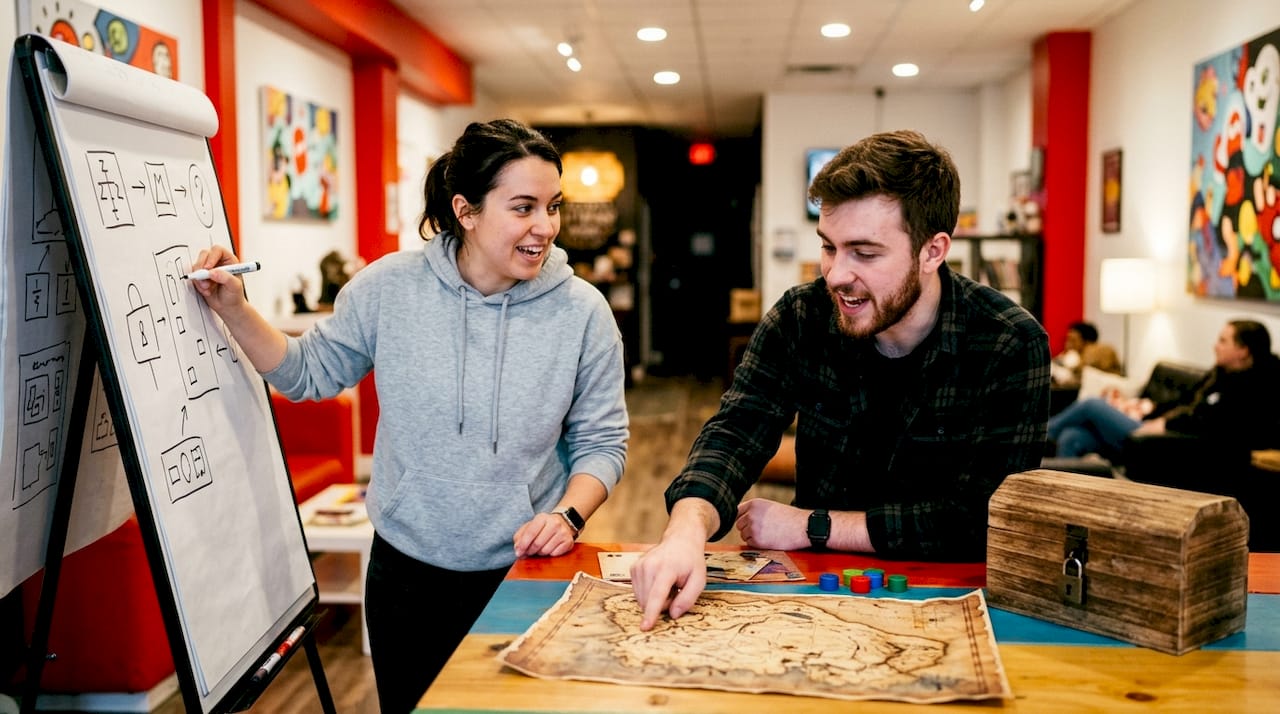
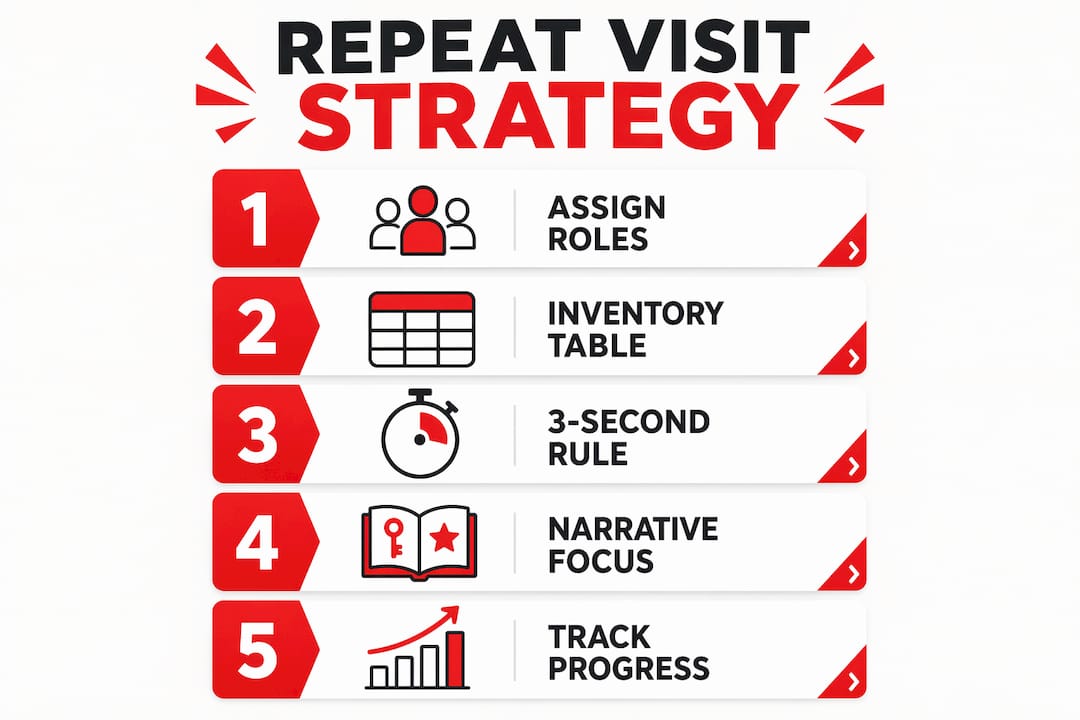
The single biggest upgrade a repeat team can make is adopting a central Inventory Table. One player, the Organizer, tracks every prop and clue in a designated spot, physical or verbal. Teams using this method escape 40% more often because they reduce missed hints and avoid solving the same puzzle twice. That 40% figure reflects how much time most teams waste on disorganization rather than actual difficulty.
Assign roles before you enter the room
Role designation consistently outperforms teams working without structure. Three roles cover most rooms effectively: the Decoder handles combination locks and cipher puzzles, the Organizer manages the Inventory Table and tracks used props, and the Spotter moves through the room calling out anything new or overlooked. Assigning these roles before the clock starts removes the decision paralysis that slows most groups in the first ten minutes.
Apply the 3-Second Rule to red herrings
Veteran players use the 3-Second Rule to cut wasted time: if a prop does not connect to anything within three seconds of picking it up, set it aside and move on. Red herrings are a deliberate design tool in most rooms. Spending two minutes on a decorative book that leads nowhere is the most common way teams fall behind on the clock.
Pro Tip: Before entering any room, agree on a single verbal signal, like “used,” that any player can call out when a prop or clue has been solved and should be set aside. This one habit eliminates the most common source of duplicated effort.
How does narrative exploration change the repeat visit experience?
Puzzle efficiency gets you out of the room faster. Narrative exploration is what makes you want to come back. Shifting focus from puzzle-solving to story immersion unlocks a deeper level of engagement that pure speed-running cannot replicate. On a first visit, most players are too focused on the clock to absorb the room’s world. A repeat visit is the first real chance to actually read the lore, examine the props as story objects, and notice design details that were invisible under pressure.
Track your progress across visits
The most committed repeat players treat each visit as a chapter in a longer story. Physical artifacts like a dedicated “Explorer’s Journal” or a venue passport, where you log rooms completed, clues found, and story threads uncovered, create a sense of persistent progress. Game Masters who act as adaptive story participants can connect your prior visits to new challenges, building a personalized game world that rewards loyalty. This is not a feature every venue offers, but it is worth asking about before you book.
The best rooms for narrative repeat visits use modular and adaptive designs where props contain hidden layers that only reveal themselves on closer inspection. A locked box you solved on visit one might have a second compartment you never noticed. A map on the wall might encode a message that only makes sense after you have completed a connected room. These details are the reward for players who slow down and look.
You can read more about how story drives immersive play and why narrative depth separates memorable rooms from forgettable ones.
Pro Tip: Ask your Game Master before the session starts whether the room has any lore or backstory documents you can read after the game. Many venues have world-building materials that never appear inside the room itself.
What operational tactics maximize value on repeat visits?
Smart scheduling and loyalty programs are the two most underused tools for repeat players. Automated loyalty programs increase repeat booking rates by 30–40% and improve customer lifetime value by over 50%. That improvement comes from targeted offers and recognition, not just discounts. When a venue knows you have completed three rooms, it can offer you a fourth at a reduced rate or flag you for a new release before it opens to the public.
Book off-peak for a better experience
Off-peak bookings deliver two benefits at once: better pricing and more personalized Game Master attention. A Game Master running one private group on a Tuesday afternoon has far more capacity to tailor hints, adjust pacing, and engage with your team’s specific dynamic than one managing three rooms on a Saturday night. For repeat players who want a customized experience, off-peak scheduling is the single most cost-effective move available.
- Join the venue’s loyalty or email list. Most venues send early access and discount codes to registered members before announcing publicly.
- Book private sessions when possible. Private rooms remove the time pressure of shared scheduling and let the Game Master focus entirely on your group.
- Mention your history when you arrive. Telling the Game Master which rooms you have completed and what you enjoyed gives them the context to personalize the session.
- Ask about upcoming room releases. Venues with active development pipelines often reward loyal players with preview bookings or beta-test sessions.
The role of communication in getting the most from these interactions cannot be overstated. A team that briefs the Game Master well gets a better game.
How do you choose venues built for replayability?
Not every escape room is worth revisiting. The replayability gap is real: venues with variable-outcome puzzles see repeat booking rates of 45% or higher, compared to the industry norm for static rooms. Variable-outcome mechanics include interchangeable puzzle components, branching decision points, and randomized code combinations that change between sessions. Players in these rooms encounter 40–60% new gameplay on a return visit. That figure makes the difference between a room worth booking twice and one that feels identical the second time.
| Feature | Replayable venue | Static venue |
|---|---|---|
| Puzzle outcomes | Variable, randomized, or branching | Single fixed solution every time |
| Prop design | Durable, high-tactility, multi-layer | Decorative, single-use interaction |
| Narrative depth | Persistent story with callbacks | Self-contained, no carry-over |
| Game Master role | Adaptive story participant | Script reader |
| Repeat booking rate | 45% or higher | Below industry norm |
Durability engineering in prop design is a reliable signal of a venue that takes replayability seriously. Props built to survive thousands of interactions are props designed to be touched, examined, and used repeatedly. Flimsy decorative props signal a room built for a single impression, not a lasting relationship with its players.
Key Takeaways
The most effective escape room repeat visit strategy combines structured puzzle tactics, narrative immersion, and smart operational choices to deliver a richer experience on every return visit.
| Point | Details |
|---|---|
| Use the Inventory Table method | Centralize all clues with one Organizer to escape 40% more often and avoid duplicated effort. |
| Assign roles before entering | Decoder, Organizer, and Spotter roles remove decision paralysis and speed up the first ten minutes. |
| Shift focus to narrative on return visits | Use repeat visits to absorb story details and track lore across sessions for deeper engagement. |
| Book off-peak for personalized attention | Off-peak sessions give Game Masters more capacity to tailor hints and pacing to your team. |
| Choose venues with variable-outcome mechanics | Rooms with randomized or branching puzzles deliver 40–60% new gameplay on each return visit. |
What repeat players consistently get wrong
Most repeat players walk into their second visit with the same mindset as their first. They treat the room as a puzzle to beat rather than a world to inhabit. That framing limits the experience before the clock even starts.
The teams at Codebusters Escape Room who get the most out of returning visits are the ones who arrive with a plan but hold it loosely. They have roles assigned, they know how to sweep a room, and they have talked to the Game Master before the session. But they also slow down when something in the room feels off or interesting, because that instinct is usually pointing at a detail worth exploring.
The other mistake I see constantly is treating the Game Master as a hint dispenser rather than a collaborator. A good Game Master remembers your team, knows which rooms you have completed, and can shape the session around your history if you give them the chance. That relationship is one of the most underused advantages a repeat player has.
Repeat visits are where escape rooms stop being a novelty and start being a genuine hobby. The players who stick with it long-term are the ones who stop chasing the clock and start chasing the story. That shift changes everything about how the experience feels.
— CodeBusters
Codebusters Escape Room and what repeat players will find here
Codebusters Escape Room in Colorado Springs is built for players who come back. The venue’s rooms, including “Flight of Deception” and “Past to the Future,” are designed with layered narratives, durable props, and Game Masters who treat returning teams as continuing characters in an ongoing story.

Codebusters Escape Room offers private bookings, loyalty benefits, and a range of difficulty levels that give repeat players a clear path to a harder challenge each time. Whether you are refining your escape room game plan or looking for a room that rewards a second look, book your next session and bring your best team. The rooms are waiting, and the story is not finished yet.
FAQ
What is an escape room repeat visit strategy?
An escape room repeat visit strategy is the set of tactics experienced players use to improve efficiency, deepen narrative engagement, and maximize enjoyment on subsequent visits to escape rooms.
How can I improve my team’s escape rate on return visits?
Assign roles before entering, use a central Inventory Table, and apply the 3-Second Rule to red herrings. Teams using structured organization escape 40% more often than those searching without a system.
Do escape room loyalty programs actually save money?
Yes. Automated loyalty programs increase repeat booking rates by 30–40% and can reduce booking costs through targeted offers, making them one of the most practical tools for frequent players.
When is the best time to book an escape room for a repeat visit?
Off-peak periods deliver better pricing and more personalized Game Master attention. A less crowded booking window gives your team a more tailored experience than a peak-hour session.
What makes an escape room worth revisiting?
Rooms with variable-outcome mechanics, branching puzzles, and durable props deliver 40–60% new gameplay on return visits. Static rooms with a single fixed solution offer little reason to return once the solution is known.